
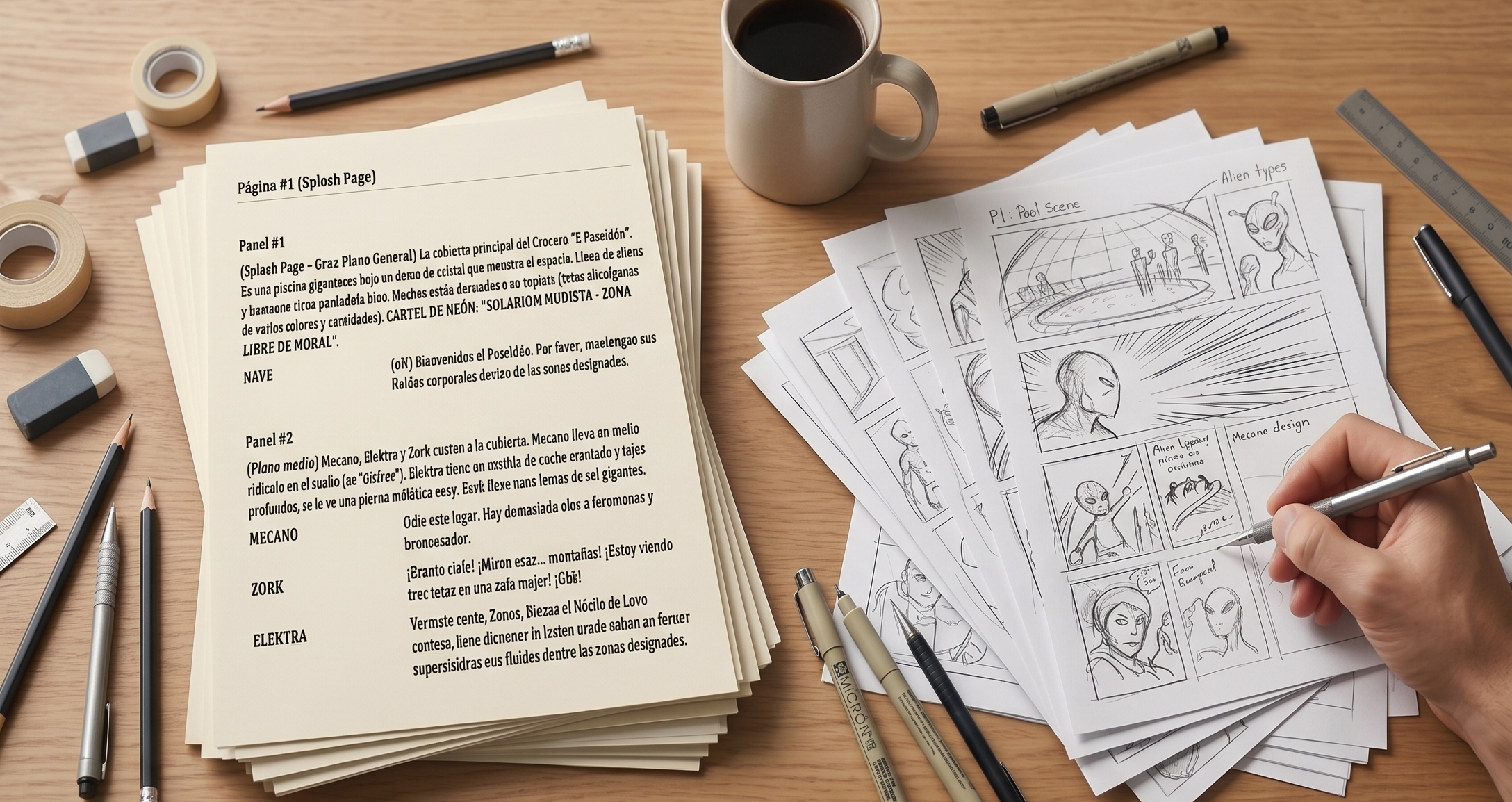
When people talk about making comics, they usually jump straight to the exciting parts—character designs, dynamic panels, big splash pages, and dramatic dialogue. I get it. That’s the fun stuff. But there’s a quieter, less glamorous piece of the process that makes all of that possible: script formatting.
If you’ve never written a comic script before, it might seem overly rigid or even unnecessary. After all, comics are visual—why not just sketch and go? But the truth is, good formatting isn’t about rules for the sake of rules. It’s about clarity, collaboration, and ultimately, storytelling.
It’s the Blueprint for the Entire Team
Unlike a novel, comics are rarely a solo effort. Even if you’re doing everything yourself, you’re still wearing multiple hats—writer, artist, letterer, sometimes editor. A properly formatted script acts as the blueprint that ties all those roles together.
When I’m writing for an artist (or even for my future self), I need to communicate exactly what’s happening in each panel without overloading it. Clear panel descriptions, consistent labeling, and structured dialogue make it easy to understand the flow of the page. Without that structure, things get messy fast—panels get misinterpreted, pacing falls apart, and suddenly the scene you imagined isn’t what ends up on the page.
Personally, I’ve found that using tools built specifically for scriptwriting helps keep that structure tight. I’ve been using Scriptbadger here and there, and it’s one of those things that quietly keeps everything organized without getting in the way.
It Controls Pacing and Rhythm
Comics live and die by pacing. Every panel is a beat. Every page turn is a moment of tension or release.
Formatting helps you see that rhythm before anything is drawn. When you break a page into panels in your script, you’re essentially editing time. A five-panel page reads very differently from a nine-panel grid. A single splash page carries weight because it interrupts the established pattern.
If your script is sloppy or inconsistent, you lose control over that pacing. A well-formatted script lets you step back and ask: “Does this moment breathe? Am I rushing something that should land harder?”
It Prevents Overwriting (and Underwriting)
One of the biggest mistakes I see—especially from newer writers—is cramming too much into a single panel. Long descriptions, excessive dialogue, multiple actions happening at once. The result? A cluttered, unreadable comic.
Formatting forces discipline. When you clearly separate panels and define what happens in each one, you’re naturally encouraged to simplify. You start prioritizing what needs to be shown versus what can be implied.
On the flip side, it also helps you catch moments that feel too thin. If a major emotional beat is only getting one rushed panel, the structure makes that obvious.
It Makes Lettering and Dialogue Work
Lettering is an art form in itself, and it depends heavily on how the script is formatted. Cleanly separated dialogue, proper labeling of speakers, and thoughtful placement notes (when necessary) make a huge difference.
If your dialogue is buried in paragraphs or inconsistently presented, it creates confusion. Who’s speaking? In what order? Where does the balloon go?
A well-formatted script answers those questions before they become problems. It respects the letterer’s job and ensures the dialogue flows naturally on the page. Tools like Scriptbadger can also help keep dialogue blocks clean and consistently structured, which saves a surprising amount of time in revisions.
It Builds Professional Habits
Even if you’re just making comics for fun right now, formatting like a pro sets you up for bigger opportunities. Editors, artists, and collaborators expect a certain level of clarity and consistency.
A clean script signals that you understand the medium—not just the creative side, but the production side too. It tells people you’re serious, that you value their time, and that you can communicate effectively within a team.
And honestly, it just makes your life easier. When you revisit a project weeks or months later, you’ll thank yourself for having something readable and organized.
It Frees You Creatively
This might sound backwards, but structure actually gives you more freedom, not less.
When you’re not worrying about how to organize your thoughts or whether your collaborator will understand your intent, you can focus entirely on storytelling. The formatting becomes second nature—a framework that supports your ideas instead of restricting them.
Think of it like panel borders. They don’t limit the art; they give it shape.
At the end of the day, script formatting isn’t about impressing anyone with how “proper” your document looks. It’s about making your story clear, intentional, and translatable from your head to the page—and eventually, to the reader.
And if there’s one thing comics have taught me, it’s this: clarity is what makes the magic work.
Leave a Reply